
Hey there, Josh Brown here.
Cam and I get some version of this question almost every single time we do an Inner circle call…how to pick a wholesale real estate market?
Someone’s got some money, some ambition, a lot of motivation — and they’re staring at a map of the United States trying to figure out where to point it.
And I get it. This decision feels huge. Pick the wrong market and you’re spinning your wheels. Pick the right one and deals can happen fast.
Here’s the thing though. Most investors overcomplicate this. They spend weeks researching and still don’t pull the trigger. So let me give you the actual framework I use — the data, the sequence, and the mindset — so you can stop guessing and start doing deals.
How to Pick a Wholesale Real Estate Market
The question “what’s the best market?” is the wrong question. It’s too broad to be useful.
The right questions are:
– Where is there a dense pool of motivated sellers?
– Where are there enough active cash buyers to absorb deals?
– Are those two things happening in the same geography?
That’s it. When you find a place where the answer to all three is yes, you’ve got your market.
Everything else is noise.
The Two Data Points That Matter Most
Here’s how I actually do this research, and it starts with the Real Estate Data Feed.
First, I go to the cash buyer dataset. I pick a geographic area — could be a county, a city, or I’ll draw a polygon right on the map — and I run a search.
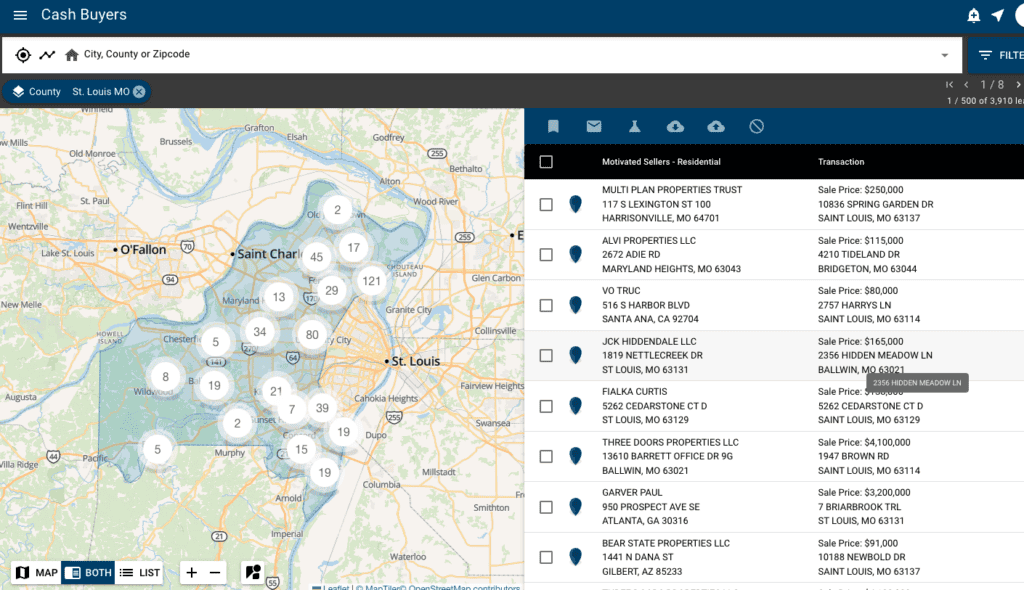
Once that search is saved, I pull up the heat map.
The heat map works like a weather radar. Red means intense activity. Yellow is moderate. Green is light. In seconds, I can see whether there’s a healthy buyer pool in that area, and exactly where within that area it’s concentrated.
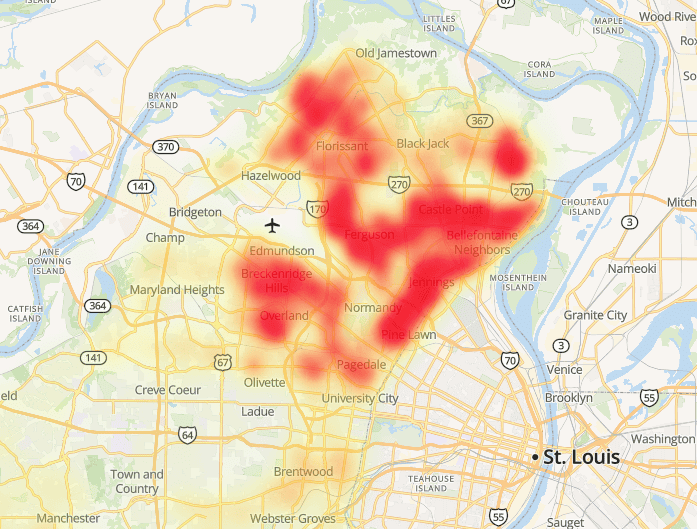
Then I run the same search for motivated sellers and pull up that heat map.
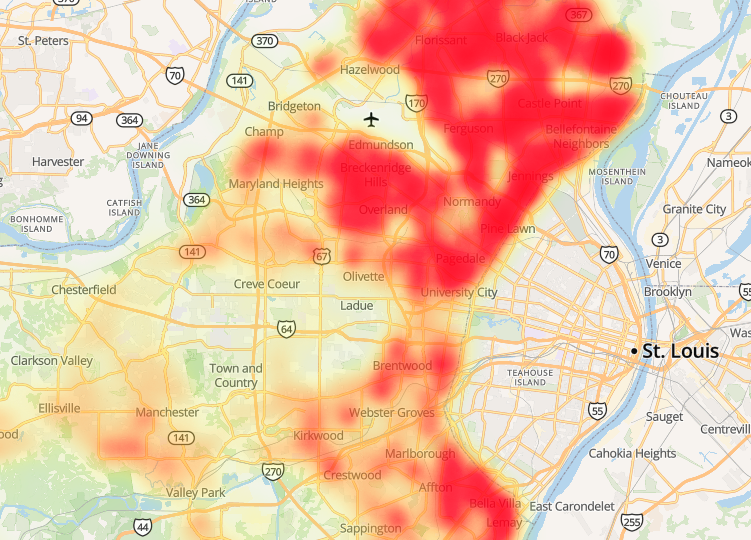
What I’m looking for is overlap. When the northeast corner of a county is lighting up red for both cash buyers *and* motivated sellers? That’s where I want to be. That’s not a guess — that’s data.
Most investors who fail at choosing a market never look at this. They pick a city because they heard someone on a podcast talking about it, or because it’s close to home. Don’t do that. Let the data show you where the action is.
The Supporting Data That Helps You Go Deeper
Once you’ve used the heat maps to narrow things down, there are a few other data points worth checking.
The foreclosure rate. More foreclosures means more distressed sellers — the kind who need your help most. This is publicly available information and AI tools like Gemini or ChatGPT can pull it quickly. Just ask: “What is the current foreclosure rate in [city or county]?” and let it do the digging.
Job growth. Markets with employers coming in and jobs being created see population growth, and population growth drives housing demand. More buyers mean more exit options for your deals.
Median sale price. I like to know roughly where prices land, but not for the reason most people think. I’m not chasing expensive markets or cheap ones. I’m looking for a sweet spot in the $150,000 to $450,000 range — enough margin to make a real wholesale fee without moving into price points where the buyer pool gets thin.
The FHA lending cap. This one doesn’t get talked about enough. The FHA cap is essentially the government’s definition of “entry level” for housing in a given market. If the cap is $300,000 in your target area, that tells you what most first-time and early-stage buyers can afford — which is exactly the type of buyer your rehabber or landlord clients are often selling to. It’s a clean proxy for where to aim.
City-data.com is a good place to find a lot of this in one place. You can look up demographics, economics, and real estate statistics for any city or zip code.
One Myth I Need to Bust Right Now
I hear it constantly: “Cheaper markets are better for wholesaling.”
Wrong. Flat wrong.
That myth has been disproven over and over and over by investors who’ve worked in both. The more dollars you’re working with, the more can stick to you. A wholesale fee on a $350,000 deal is going to dwarf a wholesale fee on a $90,000 deal, all else being equal.
Now yes, as prices climb, you tend to find more competition. And as markets grow in population, more investors tend to show up. But right now? I haven’t seen this little competition in the market in probably two decades. People are sitting on their hands because of the uncertainty in the world. That means the playing field is wide open for the investors who are willing to lean in.
Don’t choose a cheap market because you think it’s safer. Choose a *right-sized* market where the data tells you there’s real opportunity.
If You’re Targeting Florida Specifically
For anyone with an eye on Florida — and a lot of people do because it keeps growing — here’s my take.
Go to the middle.
The coasts are where prices are highest and competition is historically greatest. The middle of the state, heading up through the center to Gainesville and beyond, has markets that are wide open, growing, and hungry for investors. Jobs are moving there. People are moving there, especially from high-tax states like New York.
One stretch I find particularly interesting right now is the East Coast band between Melbourne and Daytona — Vero Beach, the Space Coast, Fellsmere, that zone. Sleepy. Catching on. Strong retail demand. If you’re looking at Florida, don’t just zoom in on Tampa or Orlando because someone mentioned them. Look at the heat maps for those mid-state and emerging coastal markets.
You might be surprised what you find.
Start Here, Not There
Committing to a market is one of the most important things you can do as a real estate investor. I’ve watched people jump from city to city, chasing something shinier, and never get traction anywhere.
Pick your market using the framework I’ve laid out. Look at the heat maps. Check the supporting data. Find that overlap of motivated sellers and active buyers. Then commit.
And once you’re committed, the Real Estate Data Feed gives you everything you need to start working that market — motivated seller lists, cash buyer data, investor buyer contacts, all in one place. There’s a 7-day free trial if you want to see what the heat maps look like in the market you’re eyeing right now.
Stop waiting for perfect certainty. The data will give you enough clarity to move. And moving is what produces deals.
Stay Sharp,
Josh Brown
good plan