
Virtual real estate investing is a more in-demand strategy than ever and, as I’m sure you know, the concept of “virtual wholesaling” has gained quite a bit of popularity over the last couple of years.
Now, virtual real estate investing is not a new concept. In fact, my systems and trainings have been highly focused on virtual wholesaling for years and I have the experience and proof to back it up. (Click here to see just a few of the folks who have closed deals through virtual wholesaling)
With that being said, I’d like to share with you a totally free, tried-and-true system that WORKS so you can successfully start virtual wholesaling in 2023 and beyond.
In this special article, I am going to reveal a streamlined process that I use to find motivated sellers. This is ‘inside information’ I have spent decades honing. It is the kind of information I ordinarily charge big bucks for.
Because my passion is to help people succeed, it is yours for free, with no strings attached.
It’s a detailed 20-minute read. Pour yourself a cup of coffee or print this out. It’s a complete blueprint you can follow step-by-step.
You are going to learn how to find bargain deals, how to find a buyer to sell your contract to, and how to put it all together…in 7 easy-to-understand steps…all virtually (if you choose).
Step 1: Find Motivated Sellers Now
The key to earning an honest profit in real estate is finding sellers that are going through a circumstance in life that requires them to sell now…aka ultra-motivated sellers.
Until very recently, these sellers were not quite as easy to find and you would have had to do a lot of digging, but I have discovered the easiest, fastest ways to locate motivated sellers in any market.
But first, let’s talk about finding your target market (AKA your “farm”).
Market Research
It all starts with picking the right spots to do deals. If you are too generic in your marketing approach, you’ll spend too much money hunting for deals and talk to too many of the wrong people. I see many real estate investors fail for this reason.
Here’s a great way to find the right area to start investing in…
- Head over to Zillow.com
- Type in a zip code near your home…
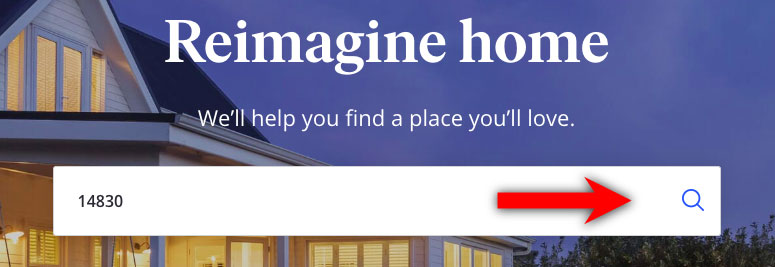
- Click “Search”
- Check “Recently Sold,” and uncheck the other “Listing Types”
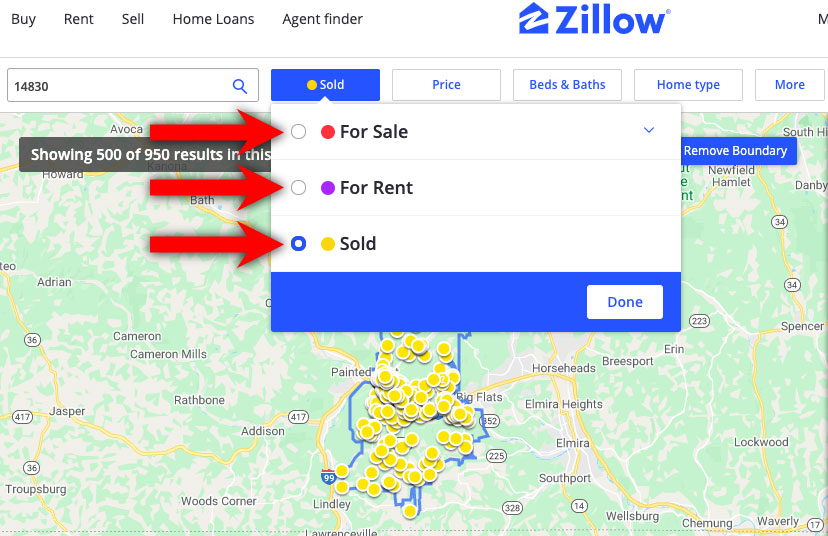
These are the houses that have recently sold in your area so that you can see where the action is REALLY happening.
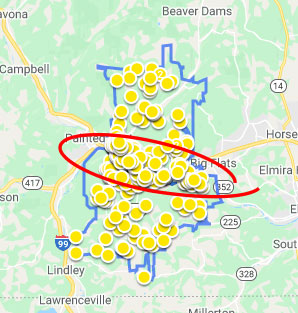
Look for the spot in your area where there are a lot of homes selling. This is usually the “starter home” neighborhood but could include “move-up” homes as well.
Zoom in a little, and look for houses that first-time home buyers would most likely buy…
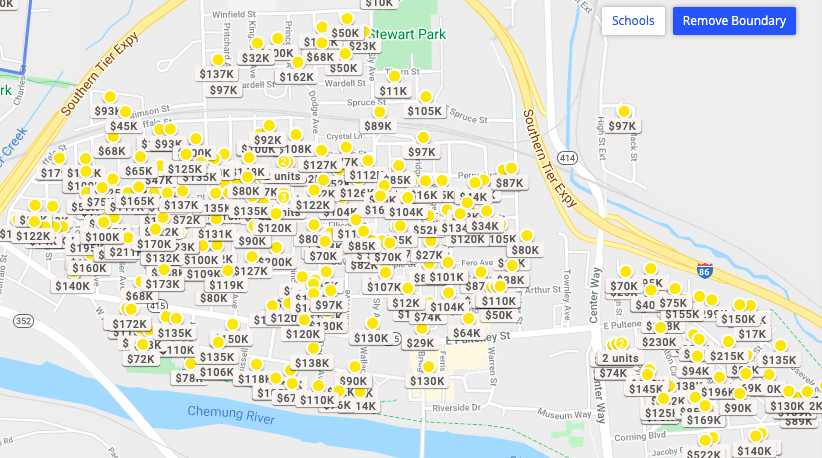
This is your pot of gold. This is where buyers are buying all year long, every year of the century.
And because of this, your cash buyer (the person you’ll wholesale your deals to) is hoping for a deal like this to come across their desk.
Create Maps
Now that you know where your farm is, you need to spend a little time creating maps so that your driving time is efficient.
- Go to google.com/maps and type in the name of your area.
- Find your “farm.”
- Compare your Google Map to your Zillow Map and keep track of the boundaries of the area you are interested in.
- Zoom in on your google map so that you can read the names of the streets.
- Starting in your north-west boundary, create a map approximately ¾ the size of your monitor by taking a screenshot. If you have a Microsoft computer, it’s called the “Snipping Tool.” If you have a Mac, it’s called “Snippy.”
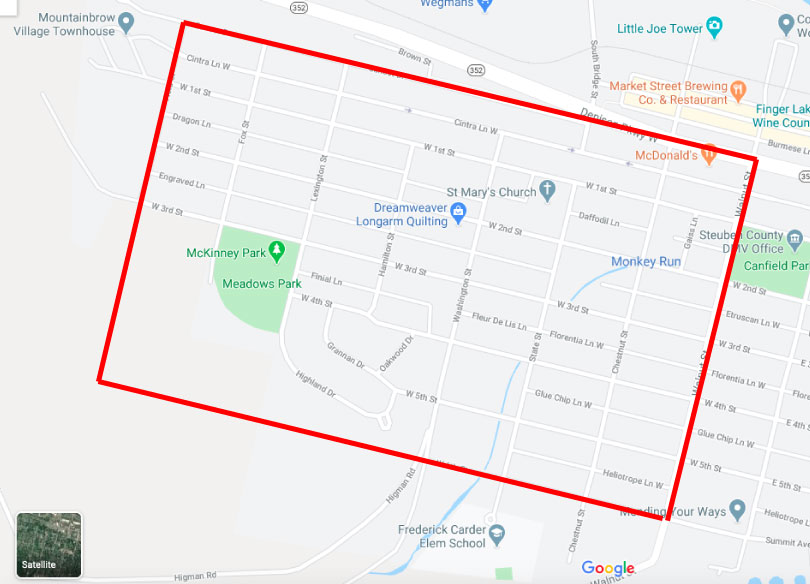
- Now print your map out, and repeat this process until your whole farm is printed out. If you are committing a whole day to this, you’ll usually end up with about 10 of these sheets before you go out. At the end of the day, you’ll usually end up with about 20-30 high quality leads.
Finding the Best Real Estate Leads
There are 2 ways to go about finding motivated seller leads. The first is…
Method 1: “Driving For Dollars” (Look For Deals)
NOTE: This method is optional because it DOES require you to leave the safety of your home or “quarantine”. However, since most of your competition typically avoids this method these days and because you can still easily practice “social distancing” with it, I decided this was still an effective option to add into this post.
For those of you who would rather stick to “working from home”, skip to Method 2!
So, now that you know where your farm is and you have all your maps printed out…it’s time to go find vacant houses, in bad condition.
The red border shows you the mini-map I would use to get started. I would start in the north and drive every street that goes north and south until I was finished. Then, I would drive every west to east street until I was finished. Then I would pull out the next mini-map and repeat, until I finished driving my whole farm.
I like to put these sheets on a clipboard and draw a line in each street as I go so that I am not back-tracking.
As you drive, look for houses that are in bad condition…this is the first sign that would cause you to slow down.
Tip: The worse the condition, the higher the probability that the seller is motivated. Here are the types of things I am looking for…
- A roof in bad condition
- Stickers on the front door
- Grass is super tall
- Landscaping is neglected
- Boarded-up or broken windows
- Mold all over the siding
- No curtains…no furniture in the house
- Pile of newspapers
- Mail falling out of the box
- No tracks in the snow in the driveway (northern markets)
These are all indicators, not requirements. The overall goal is to find vacant junker houses.
If the house is vacant, that is a good indicator that the seller is motivated. If the house is also in bad condition, that is a great indicator that the seller is motivated. Ideally, you want both, but you need to use your best judgment while out in the field.
If you don’t have a car, your market is across the country or you prefer to work strictly from your desk, here is another way to find deals…
Method 2: Automated Deal Finding
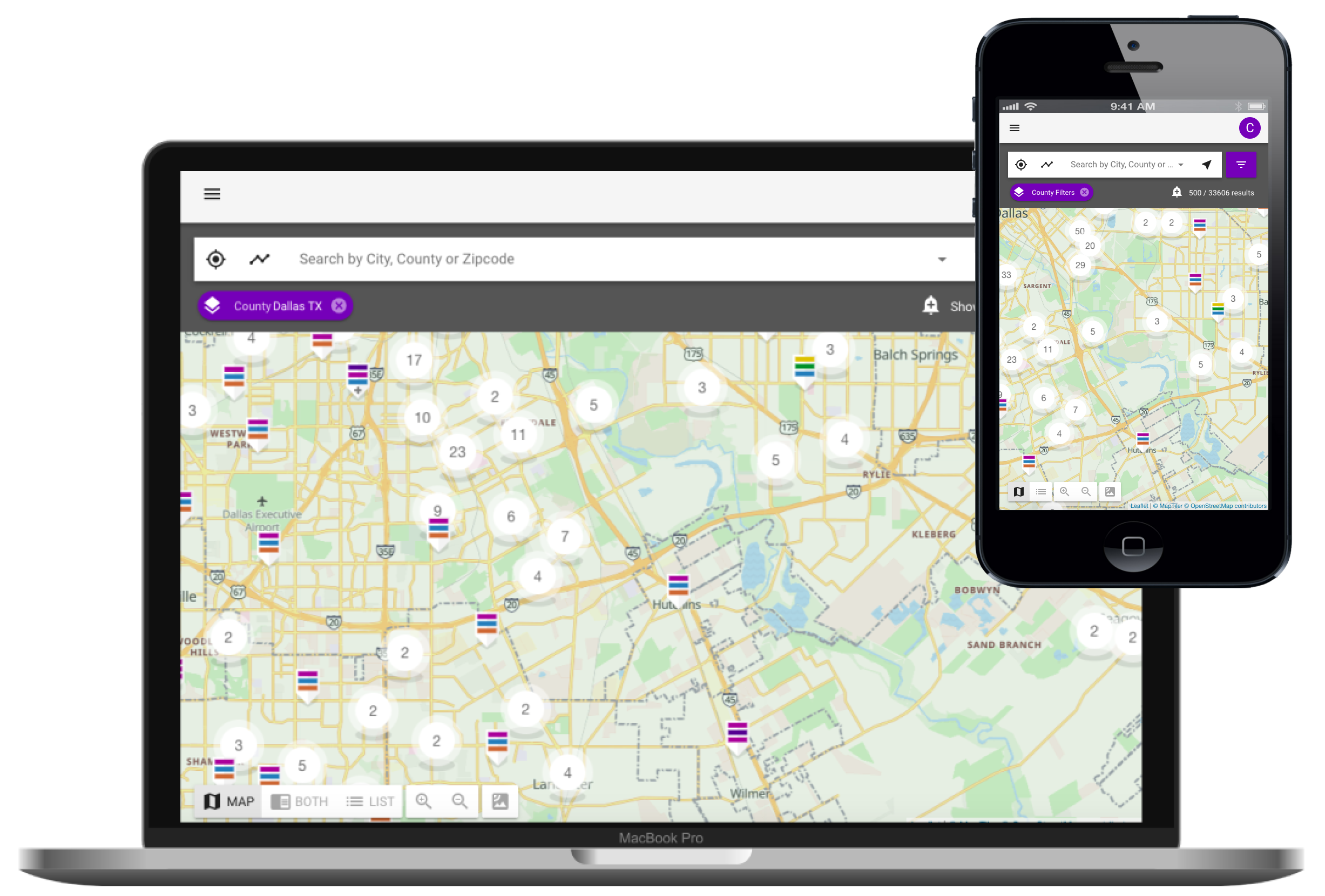
The second way you can find motivated sellers is by using an online resource like the Motivated Seller Data Feed. This software lets you search the entire country, zero in on your specific farm area and then provides you with all the motivated sellers (with up to 20 motivations) in that area.
Using a software solution like this gives you unbelievable speed of implementation and can really help you keep a steady flow of leads going through your business.
With the Motivated Seller Data Feed you’ll get access to:
- Verified Vacant Houses
- Chapter 7 and Chapter 13 Bankruptcies
- Foreclosures
- Absentee Owners (In town, out of town, out of state!)
- Liens
- Judgments
- Inherited houses
- Upcoming auctions
- Built in Mail Manager & Marketing Templates
- NCOA addresses and phone numbers (when available)
- The ability to order skip trace searches with a few clicks of a button
- Seller phone scripts
- And more!
If you prefer to “work from home” and find great leads, then this is an avenue you’ll definitely want to check out. You can get full details on the Motivated Seller Data Feed here.
Step 2: Pre-Screening the Deal
So now, if you went with Method 1, you are in front of a house that appears to be vacant and in disrepair. Get out of your car and peek through the window to confirm it is vacant. Then, go around the whole house and look for windows without curtains, to see what the condition is like inside.
Square Footage
You’ll need to confirm the house is vacant and get a good idea of what the interior condition is like. Use your judgment. If it seems like a good opportunity, it’s time to determine how many square feet the house is.
You need to measure your stride in advance. Take a tape measure and walk the length of it, taking a normal stride. Now divide the number of feet of the tape measure by the number of strides and that is your average “feet per stride”. Once you know this number, you can use this average for estimating the square footage of all of your properties.
Using the same normal stride, walk the length, and record the number of strides. Now multiply that number by your average feet per stride. Now repeat for the width of the house and multiply the length by the width. If there is a 2nd story, double it. If there is an addition, add it. This gives you the approximate square footage of the house so that you can do a better job of evaluating the “after-repair value” of the house.
If the house is less than 850 sq ft, I tend to shy away. Our “bread and butter” properties are houses that an average sized family would move into. If the average house in your area is small, then go for it. The key is to make sure that the house will be in high demand after it’s fixed up.
Salability
I also look at the style of the house. Perhaps in your area, ranches are in high demand, but 2 stories, not as much. If the seller is motivated and I think I can make money, I will do the deal knowing that the demand is lower, but that means the offer has to be lower.
The typical family wants a 3 bedroom, 2 bath house with a cute yard and would love a garage and basement. They don’t want funky houses, but since this is their first home, they are not too picky. Just realize that the closer you get to the ideal house… the higher the demand and the easier it will be to sell.
How to Estimate Repair Costs
While you are at the house, you need to make an estimate of repairs. The best way to do this is…quickly!
You do not know if the seller is motivated yet, so you do not want to waste your time estimating repair costs on a hundred houses. You’ll already have a good idea of what needs to be done on the inside, now factor in the outside.
If the house is in move-in condition or better…it’s probably not going to a very good lead. You can add it to your mailing list if you want because the seller might be motivated… but if it is a “pretty house,” it will be a different exit strategy than what we are discussing now.
For houses in bad condition, I do not go line by line and figure out each repair cost…I simply classify it as bad, really bad, or awful:
Bad
- Needs a new kitchen, bath(s), paint, flooring, fixtures, minor plumbing, minor electrical, minor landscaping
Really bad
- Everything listed in the bad category, plus electrical panel, HVAC, roof, major wall repairs, more landscaping
Awful
- Everything listed above plus new windows, siding, foundation issues, structural issues, major wood rot, re-wire, re-plumb, major landscaping
If the house is in “bad” condition, I estimate that the cost to repair the house will be $20 per square foot. I take my square foot measurement from above and multiply it by $20 to come up with my estimate of repairs. That’s it!
The truth is, everyone has their own ways of fixing things. A bank may pay $20/foot to get the same work done that a “do-it-yourselfer” would pay $5/foot. I do the math in my own rehabbing business, and I tend to pay about $20/foot to have someone fix up a house for me when the property was in “bad” condition.
When the house is in “really bad” condition, I use $30 for my multiplier.
When the house is in “awful” condition, I use $40 for my multiplier.
It is important to note that this is what I believe that I can get it done for. The person you wholesale it to may have a different opinion. What I really care about is making the right offer and selling the house to the right buyer.
The real beauty of my repair formula is its simplicity and flexibility. It doesn’t get a whole lot simpler, and then if you need to, you can adjust the price per square foot to fit your market. Plus, when you’re ready, it allows you to estimate repairs on houses you’ve never seen or visited in person (like the ones you find on Motivated Seller Data Feed). For many of my students, this formula is a big part of what makes it possible for them to do deals in other cities, in some cases halfway across the country, again, without having to visit the house.
The best buyers in your market buy houses like this on a regular basis, and they have a crew of workers who fix up houses for them. These are the types of buyers I am looking for after I contract the house, and I want to use the repair pricing they would use.
Tip: This exercise should take no more than 5 minutes per house.
If the house is a “tear-down,” pass on it. You can make money on these deals, but you’ll need a different kind of buyer that is harder to find.
Now that you have your repair estimate, add it to the back of the mini-map along with the address of the property.
Since you are flipping houses with no money, I recommend doing this until you find 50 – 100 vacant junkers. It’s a numbers game, so if you have a large number of sellers to talk to, and considering that owners of vacant houses are categorically motivated, there is a good chance that you will find a motivated seller and put a deal together in short order.
Remember, your goal is to get a deal done within 30 days from today. You need to remind yourself of that every day, and focus ONLY on the activities that generate revenue.
Step 3: Find The Property Owner
At this point, you should have a pile of hot leads. These are houses in bad condition that are vacant. Knowing this…you can be confident that the seller is motivated. You do not know this yet, but you have a much, much higher chance than putting an ad in the paper, etc.
Since the house is vacant, you know they do not live there. Now you have to do a property owners search so that you can let them know you are interested.
How do you find the owner?
You have to get access to county public records. Most counties have this information available online for free. You can Google “____ county property tax records”. If you cannot access this data, you may have to go into the county courthouse and visit the “tax assessor” and ask how you can find owner information. Don’t worry…they get this all the time, and the information is publicly available.
But, I have a shortcut for you…
- Go to www.whitepages.com/reverse-address
- Type in the address in the main search bar
- Hit “search”
- From here, you can see Owner and current residents, property details, neighbors and more
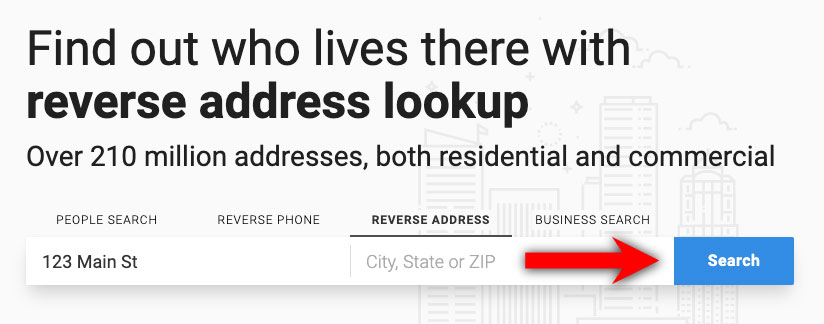
Now you have the public records on the vacant junker you just found.
You will have to do a little digging at this point. What you are looking for is the most recent “tax bill”. This tells you where the county sends the property tax bill and who is responsible for it.
That is most likely the owner of the house. Now record the property owner by address and track them down.
At this point, you can do a Google search with the name and address of the person. Sometimes, this will give you all the information you need. However, sometimes you’ll have to do quite a bit of digging. Look in several places, and try your best to find their most recent address.
It is quite common to see matching addresses. This is where the address of the vacant junker is the same as the mailing address with the county. Most investors consider this a dead end…. But not me!!! And not you!!!
This is where you set yourself apart from the competition. This is one of the biggest reasons we can be flipping houses with no money.
Common sense says that if we send a mailer to the owner at the vacant house, it is a waste of money. But when you understand how the United State Postal Service works, what it really represents is…opportunity!
The owner will often leave the house and set up “forwarding” with the USPS. This means that all mail sent to the vacant house will get forwarded to them at their new address.
It also means that you can learn the new address. (The Motivated Seller Data Feed Software I talked about earlier provides ALL of this information at the click of a button as well. A huge time saver.)
You have to put a little language on your letter to let the USPS know you are interested.
By placing the term “Address Service Requested” underneath your return address, you compel the USPS to photocopy your envelope, forward your letter, and then send you the photocopy with the new address. There is a fee for this service and can only be used when you use first-class mail. It’s generally around 75 cents per return.
Here is an example of how it should look…
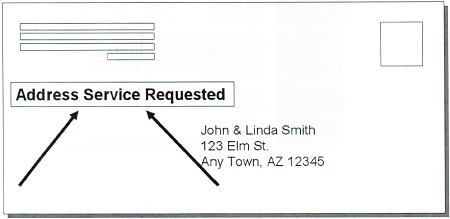
You can print out stickers on your computer, you can hand-write it, you can get a stamper, it doesn’t matter… just include that language when the seller’s mailing address matches the vacant junker house address.
If the seller’s mailing address is different than the house you are interested in, then send the letter without “address service requested.” The more personal and friendly it looks, the more likely the recipient will open it.
If you did not find the owner in Google, your other options are…
- Phone book
- Knock on the neighbors’ doors
- Put an FSBO sign in the yard of the vacant junker with your number on it
- This will get you calls from neighbors and the angry owner
- Not a great first impression, and riskier… but desperate times call for desperate measures
- Skip trace search
- I actually do so many skip traces in my real estate business that a number of years ago I created the best of the best skip tracing tools available for real estate investors. It’s called FindTheSeller.com
- This will get you calls from neighbors and the angry owner
Using a service like FindTheSeller allows you to skip most of the steps in step 3, saving you a TON of time and effort. If you have access to the Motivated Seller Data Feed, you can run skip traces in a snap right within the system.
Step 4: Pre-Screen the Seller
Once you get the seller on the phone, you have to determine if they are a motivated seller or not. You don’t want to waste time driving all around town…meeting with sellers who would never sell to you for a discount.
What To Say To The Seller
Whether you are calling or sending a letter, the message you want to get across is that you have a solution to their problem.
Let them know that you will buy the house “as-is,” you will make a cash offer and you can close on the date of their choice.
Don’t worry about the money part…I will address that later in this article. They don’t have to know that you are flipping houses with no money.
Make sure to ask them the magic question…“If I paid all cash and closed on the date of your choice, what would be the least you could accept?”
Now, wait for their response!
You may be uncomfortable with this question, but this is the turning point. If their response is favorable, you have a deal. If their price seems too high…you are most likely talking to an un-motivated seller.
Your job is not to convince anyone of anything. These are people that are desperate for a solution to their problem.
Your job is to find out how you can help them. The right kind of seller is not as motivated by the money as they are by “peace of mind.” They are paying double bills while the house continues to degrade. They don’t know what to do, so when you call them offering to take it off their hands, they tend to be excited and grateful.
You promised to make them an offer… now it’s time to deliver.
Step 5: Estimate House Value
This is the most critical component of the whole process.
If you get this right, your buyers will love you, your offers are based on reality, and the rest of your career will go much smoother because you will understand values in your farm off the top of your head.
Your goal is to determine the “After-Repair Value” (also known as the “ARV”).
This is the value the house WILL be in after it has been fully rehabbed. This is the price that the end 1st-time home buyer is willing to pay.
You need to find out how much your house is worth yourself because if you hire an appraiser on every deal, you will go broke, and you need a little more control of the process. If the appraisal takes a week to come back, you will have most likely lost the deal to another investor by then.
Using comparables (also referred to as “comps”) will help you determine the ARV. It is critical that you use the correct comps, though.
There are 3 main components to selecting the right comps…
- Proximity
This is how close the comparable house is to the vacant junker you are interested in. In a perfect world, the comp would be on the same street, but if it is in the same subdivision, that is still a good comp. If you can’t find any, then just make sure to keep it under 1 mile away from the vacant junker. If you live in a rural area, you may have to expand and include anything that is in the same town and school district.
- Recency
This is how recently the comp sold. Did it sell last week? Last year? The more recent it sold, the better. Ideally, you want comps within 30 days. That is not always possible, so if you need to expand out to 90 days, that would be good too. Worst case, don’t go out any further than 1 year.
- Size & Amenities
Make sure the number of bedrooms is
Currently devouring the vacant house bank investment program, is this something better or in addition to?
Thanks Cam for sending for sending me this excellent program. I will try to make something happen using this blue print.
Thanks,
Henry Foldberg
thank you very much for the info Cam it was VERY INFORMATIVE .
Mike Martin
Thank you very much! It IS very informative and helpful!
Vladimir Borovskikh
Cam, once a cash buyer is indentified, a down payment for a non-refundable deposit is made, a proof of funds is shown, the next step would have an assignment of contract signed before they see the seller property, is that correct. Showing me the proof of funds should I ask for a copy of it or that’s not necessary. Is it authomatically understood by the title company that my name is not placed on the transfer.
Get a copy the POF, A contract with the seller is enough to show the house to buyers because you “control” it with that. Assignments under scrutiny and can only be done with private sellers, so be thinking about a back to back closing too.
I feel comfortable with all aspects of flipping a house except for finding a cash buyer before my scheduled closing date with the seller.
If you’ve got the house cheap enough, finding a buyer will not be a challenge. Cash buyers pounce on good deals. Our Cash Buyer Data Feed is an inexpensive insurance policy providing you with known cash buyers. Then all you need is 1 or 2 regular buyers and you’re set.
What happens if you make a contract with a seller, but can’t find a buyer?
A couple things. First is for you to realize that you were willing to pay too much for the property, which is clearly evidenced by the lack of interest from buyers. If your asking price, which has your profit margin built into it, draws little or no interest, this should be abundantly clear to you and should serve as a lesson to carry forward to your next deal.
As to the contract with the seller, if you have an inspection period, and you’re within it, the house would be found to be unsatisfactory and you would demand your Ernest money back. If you don’t have that out, you might lose your earnest money deposit. The “trick” is to buy so low that your buyers simply can not refuse.
Cam, do you know if Assignment of Contract is legal in Texas? Can you explain in more detail how a double closing would work if had to go that route please sir?
Assignments are fine in TX but scrutinized and becoming less popular everywhere.
A detailed explanation of a double close is not practical here. Please attend one of my events.
Thanks Cam very informative info
Cameron Dunlap one of the most unselfish incredible person of the century! Thank u for all u do Cameron you and your program are absolutely Incredible!
Very imformative, thank you!!
Cameron Dunlap you are extremely generous with all steps we need to complete a buy and a sale. I’ve been away from the industry for quite some time and was interested in what was possible in 2021.
You are very clear and concise and I appreciate all the work you put into writing these posts. They are extremely clear and helpful. Thank you!!!
I am buying into the program after attending the last three day wealth summit. I have always wanted to do this, and now after the last three days, I feel that working with Cam and his team is going to make it possible for me to tackle this business! I have confidence that I have the processes needed at my fingertips that will enable me to complete these transactions! With the knowledge and experience that Cam and his team are sharing with me to support my efforts, I am very excited to get started and move forward to become financially independent!
Hi Cam,
At what point do we find out what’s owed on the property? What’s the seller’s initial mortgage amount and what is still due? Wouldn’t this be beneficial when doing our due diligence on comps, ARV, and MPP?
All The Best…
There is debt stack info in our Motivated Seller Data Feed, but the good old fashioned way is to ask the seller. If they push back on your asking, they’re probably not motivated.
Cam
This is an excellent outline and review of the wholesale process, and how to benefit by having the right tools. Thank You Cameron
Great advice Cam on asking the seller the good old fashion way. I like that! Thanks Cam.
Thank you for sharing this information CAM. I am happy to have attended the 3-day Summit. I leaned so much that now I feel so comfortable in getting started, and I’m ready for success!! Hope to be sharing good news soon!
I’m new to wholesaling and was wondering how hard this would be to start. I’m young and value hard work so, I would like to get a head start on my career. Would being young also make it hard to start?
Young and willing to do the work?….
You are perfect for this and the time is now!
Cam
New for PA in 2025. Sounds like dual closing will be best in PA?
Here’s the article for folks in PA.
https://www.barley.com/act-52-imposes-new-regulations-on-real-estate-wholesaling-in-pennsylvania/